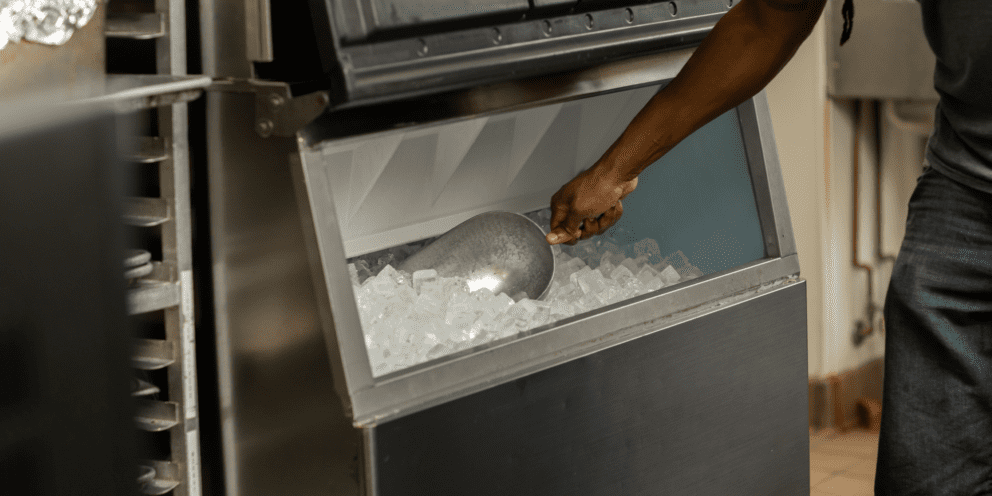
A person using a metal scoop to retrieve ice from a stainless steel Hoshizaki ice storage bin

Under-Counter vs. Modular: Choosing the Best Hoshizaki Ice Machine Form Factor


Introduction


Choosing the wrong ice machine form factor can lead to wasted space, slow service, and higher operating costs. This guide breaks down the difference between under-counter and modular Hoshizaki machines in clear, simple terms so you can choose confidently and invest in the right model for your daily demand and workflow. These two form factors serve different installation styles, storage needs, and daily-demand patterns.


TL;DR

Under-counter: Best for small spaces, low-volume use, cafés, bars, and secondary stations.

Modular: High-volume, scalable, ideal for restaurants, hotels, and healthcare facilities.


Who It's For


This article is written for ice machine business owners, first-time buyers, and managers who need a straightforward explanation of how ice machine form factors work. Whether you're expanding seating, creating a new bar station, or replacing an older unit, understanding the differences between under-counter and modular machines will help you make the right investment. If you're browsing Hoshizaki models, start with the KM Edge line or explore specialty ice types such as flakers and cubelet models.


Key Considerations


How much ice do you truly need?

Under-counter machines fit beneath standard counters and produce smaller amounts of ice—perfect for small bars, cafés, offices, and lighter-duty environments. Modular units sit atop a separate bin and deliver far greater daily production, making them ideal for restaurants, hotels, and high-volume operations. When comparing machines, remember that bigger isn't always better; choosing the right capacity avoids wasted energy and saves long-term cost.


Brand reliability and long-term value

In a commercial ice machine comparison, Hoshizaki stands out for durability and low maintenance. Some buyers research Hoshizaki vs Manitowoc; both brands are respected, but many operators prefer Hoshizaki for its stainless-steel evaporators and fewer service issues over time. Choosing the right form factor directly impacts serviceability and long-term dependability.


Space limitations and workflow

If your prep area or bar is tight, under-counter models keep everything compact and out of the way. If you have room for a standalone bin or need multiple service stations, modular units offer more flexibility and faster access to larger volumes of ice. Your staff's workflow and available floor space should guide your form factor choice as much as your ice type or daily load.


Budget and operating cost

Under-counter units usually cost less upfront, while modular units have a higher initial cost but better production-to-price value for businesses with heavy demand. Financing options may help with larger machines—visit our financing page for predictable monthly payments.


Model / Ice-Type Fit


Crescent ice (KM Edge series)

Everyday restaurants and bars benefit from crescent ice machines that balance production, efficiency, and versatility.


Square cubes

Square cubes are used for premium cocktails and beverage presentation. Explore available square cube models.


Flake ice

Flake ice is ideal for seafood displays, healthcare, and bakery environments where moldable ice is required.


Cubelet / nugget ice

Cubelet ice works well for healthcare, cafés, and self-serve dispensers due to its soft, chewable texture.


Sizing


Estimate daily usage

• Restaurants: 1.5–2 lbs of ice per guest

• Bars: ~3 lbs of ice per seat

• Cafés / quick-serve: 0.8–1.5 lbs per drink

• Hospitals: 5–10 lbs per bed


Example calculation

A 60-seat restaurant requires approximately 90 lbs per day. Adding a 25% buffer brings total demand to about 112 lbs per day. An under-counter unit may work, but a small modular machine allows room for growth.


Add a peak buffer

Ice machines refill gradually, not instantly. Adding 20–30% extra capacity prevents shortages during rush periods.


Install Notes


Under-counter installation basics

Under-counter Hoshizaki ice makers require a dedicated electrical outlet, cold-water supply, nearby drain or pump, and proper ventilation space.


Modular installation notes

Modular machines sit atop a bin and require planning for drainage, airflow, electrical access, and bin pairing. Coordination with contractors may be necessary.


Workflow and access

Under-counter machines support fast bartender access, while modular machines suit back-of-house prep and high-volume service areas.


Maintenance


Both form factors require routine cleaning, descaling, and sanitizing. Modular machines may require additional steps when paired with remote condensers, while under-counter units need frequent coil cleaning in tight spaces. Regular maintenance protects efficiency and reduces downtime. For professional support, visit our service page.


Get a fast quote and delivery date—start with our ice machines or message us via our contact page.

Under-Counter vs. Modular: Choosing the Best Hoshizaki Ice Machine Form Factor

Intro

Choosing the wrong ice machine form factor can lead to wasted space, slow service, and higher operating costs. This guide breaks down the difference between under-counter and modular Hoshizaki machines in clear, simple terms so you can choose confidently and invest in the right model for your daily demand and workflow. These two form factors serve different installation styles, storage needs, and daily-demand patterns.

TL;DR

  • Under-counter: Best for small spaces, low-volume use, cafés, bars, and secondary stations.
  • Modular: High-volume, scalable, ideal for restaurants, hotels, and healthcare facilities.

Who It's For

This article is written for ice machine business owners, first-time buyers, and managers who need a straightforward explanation of how ice machine form factors work. Whether you're expanding seating, creating a new bar station, or replacing an older unit, understanding the differences between under-counter and modular machines will help you make the right investment. If you're browsing Hoshizaki models, start with the KM Edge line or explore specialty ice types such as flakers and cubelet models.

Key Considerations

How much ice do you truly need?

Under-counter machines fit beneath standard counters and produce smaller amounts of ice—perfect for small bars, cafés, offices, and lighter-duty environments. Modular units sit atop a separate bin and deliver far greater daily production, making them ideal for restaurants, hotels, and high-volume operations. When comparing machines, remember that bigger isn't always better; choosing the right capacity avoids wasted energy and saves long-term cost.

Brand reliability and long-term value

In a commercial ice machine comparison, Hoshizaki stands out for durability and low maintenance. Some buyers research Hoshizaki vs Manitowoc; both brands are respected, but many operators prefer Hoshizaki for its stainless-steel evaporators and fewer service issues over time. Choosing the right form factor directly impacts serviceability and long-term dependability.

Space limitations and workflow

If your prep area or bar is tight, under-counter models keep everything compact and out of the way. If you have room for a standalone bin or need multiple service stations, modular units offer more flexibility and faster access to larger volumes of ice. Your staff's workflow and available floor space should guide your form factor choice as much as your ice type or daily load.

Budget and operating cost

Under-counter units usually cost less upfront, while modular units have a higher initial cost but better production-to-price value for businesses with heavy demand. Financing options may help with larger machines—visit our financing page for predictable monthly payments.

Quick Comparison Table

Feature Under-Counter Modular
Production Capacity Lower (50–100 lbs/day) Medium–High (200–1,000+ lbs/day)
Best For Cafés, bars, small stations Restaurants, hotels, and healthcare
Installation Easy Moderate–complex
Storage Built-in Requires a separate bin
Cost Lower upfront Higher but scalable
Space Needed Tight spaces Larger footprints

Model / Ice-Type Fit

Once you know your ice type, choosing the form factor becomes much easier. Each ice style fits specific business needs:

  • Crescent ice (KM Edge series): Everyday restaurants and bars
  • Square cubes: Premium cocktails (see models)
  • Flake ice: Seafood displays, healthcare, bakeries
  • Cubelet/nugget: Healthcare, cafés, self-serve dispensers
✔ Best For: Matching your ice type to your service style
✘ Not Ideal For: Choosing an ice type without knowing your daily usage

Sizing Math

Step 1: Estimate daily usage

Before deciding on the form factor, estimate how much ice you realistically need based on your operation type.

  • Restaurants: 1.5–2 lbs of ice per guest
  • Bars: ~3 lbs of ice per seat
  • Cafés / quick-serve: 0.8–1.5 lbs per drink
  • Hospitals: 5–10 lbs per bed

Example Calculation

A 60-seat restaurant:
60 seats × 1.5 lbs = 90 lbs/day
Add 25% buffer = 112 lbs/day
→ An under-counter Hoshizaki under-counter ice maker can work, but a small modular unit gives more room for growth.

For a precise number, try our size calculator.

Step 2: Add peak-demand buffer

Ice machines refill throughout the day, but not instantly during rush hour. Add 20–30% extra capacity to avoid shortages.

Step 3: Match demand to form factor

When capacity becomes a concern, compare the ranges:
50–100 lbs/day → Under-counter models
200–1,000+ lbs/day → Modular ice machine capacity is the better fit

Install Notes

Under-counter installation basics

Under-counter Hoshizaki ice makers slide beneath a standard counter. They require:

  • A dedicated electrical outlet
  • Cold-water supply
  • A nearby drain or optional drain pump
  • Ventilation space around the machine

Modular installation notes

Modular units sit atop a bin or dispenser and may use remote or self-contained condensers. Installation planning includes:

  • Choosing a bin that matches production needs
  • Ensuring proper drainage and airflow
  • Planning space for electrical and water lines
  • Coordinating with your refrigeration or contractors

For a full overview of the installation, review our installation guide.

Workflow and access

Under-counter units provide quick reach for bartenders and café workers. Modular setups benefit back-of-house prep areas that require large scoops or bagging stations. Think about who uses ice, how often, and from where.

Maintenance

Both form factors require routine cleaning, descaling, and sanitizing. Modular machines may require steps when paired with remote condensers, while under-counter units may require more frequent coil cleaning in tight kitchens. Regular maintenance protects efficiency, reduces downtime, and improves brand reliability. For professional service options, visit our service page.

Need Help Choosing?

Not sure whether an under-counter or modular Hoshizaki machine is right for you? Our team can help you compare models, calculate the right capacity, and provide fast quotes.

Browse ice machines or contact us for expert sizing help.