
Sign in
Hoshizaki for Drive-Thru Speed: Ice Delivery without Bottlenecks
December 12, 2025
87
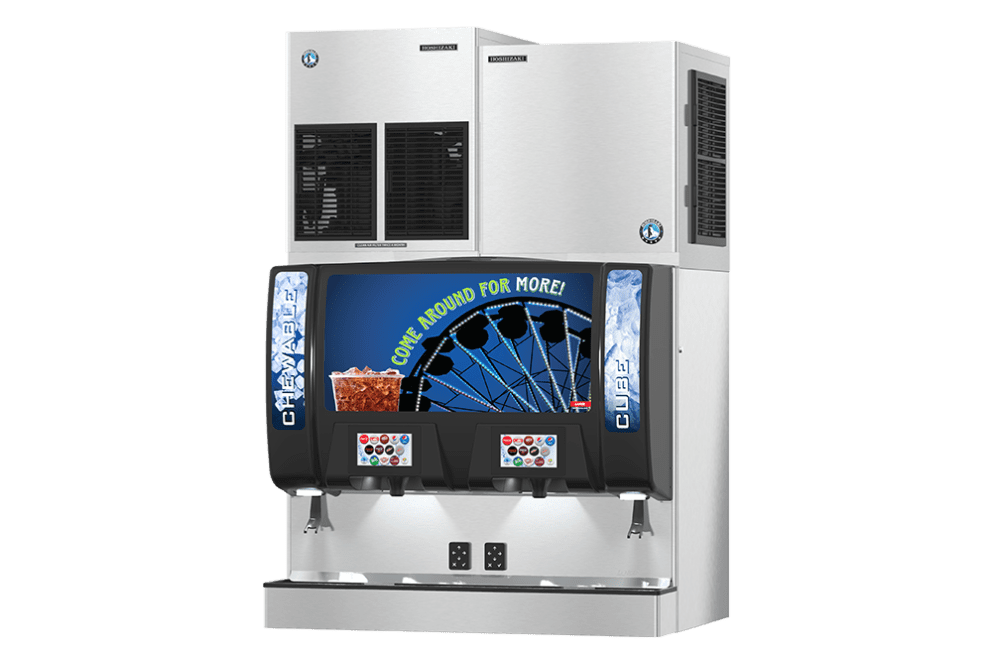
Quick answer: Prevent drive-thru ice bottlenecks by sizing the complete Hoshizaki system for peak-period demand, recovery time, and usable storage—not just the daily total. Place ice where employees can reach it without crossing traffic, match the ice maker to a compatible bin or dispenser, and verify ventilation, drainage, water, electrical, sanitation, and service access before installation.
Why ice becomes a drive-thru bottleneck
Drive-thru service concentrates demand into short periods. A restaurant may have enough ice production over 24 hours and still run short during lunch, dinner, or a promotion because cups are filled faster than the system can recover. The delay may also come from poor placement, an undersized serving bin, awkward scooping, a slow transfer process, or a dispenser that does not match the required ice type and workflow.
Treat ice as part of the beverage line rather than as isolated equipment. The goal is a safe, repeatable path from production to the cup with enough reserve for the busiest interval.
Measure peak demand before selecting equipment
Start with the busiest 15-, 30-, and 60-minute periods. Record the number and size of iced drinks, refills, employee beverages, food-preparation uses, and ice transferred to other stations. Note when the storage level begins to fall and how long the machine has to rebuild inventory before the next rush.
Also record emergency bagged-ice purchases and transfers from another machine. Those are real demand, even if they are not shown in beverage sales. A practical sizing review should include:
- Ice used during the peak service period.
- The reserve needed until production catches up.
- Realistic output under the site’s room and incoming-water conditions.
- Usable storage for the operating cycle.
- Expected menu, cup-size, and transaction growth.
Do not size from one manufacturer rating without reviewing its stated test conditions. Ambient temperature, incoming-water temperature, ventilation, maintenance, water quality, and installation can affect real production. See what affects commercial ice output before assuming that a shortage requires a larger machine.
Separate production, storage, and delivery problems
A useful diagnosis asks three different questions:
- Production: Can the machine make enough ice across the operating cycle under actual site conditions?
- Storage: Can the system hold the reserve needed for the next rush?
- Delivery: Can employees move or dispense ice into cups quickly and safely?
More production will not fix a narrow serving bin or a poor station layout. A larger bin will not solve inadequate production over a full day. A dispenser may improve portioning and access, but only when it is approved for the selected ice maker and ice type.
Choose the right configuration for the workflow
Undercounter at the point of use
An undercounter unit can shorten employee travel and support a compact beverage station. It is often useful as a dedicated point-of-use source when its production and built-in storage cover peak demand. Its integrated storage is fixed, so growth may eventually require another configuration.
Modular head with a storage bin
A modular ice maker paired with a compatible bin provides more flexibility in production and reserve storage. It can support a central beverage line or supply multiple stations, but employees still need a sanitary and efficient way to access or transfer the ice.
Ice maker with a compatible dispenser
A compatible dispensing system can reduce repeated scooping and help standardize cup filling. Confirm the exact ice maker, dispenser, ice type, adapter or top kit, and electrical requirements as one approved assembly. Do not assume that any modular head fits any dispenser.
Compare the practical differences in our guide to Hoshizaki bins and dispensers. If the current undercounter unit is being outgrown, review when to move from undercounter to modular equipment.
Design the employee path around speed and safety
Count the steps from the employee’s normal position to the ice source. Look for door swings, tight turns, wet-floor exposure, cross-traffic with food runners, and competition for the same bin. Place the serving point close enough to reduce motion without blocking cup storage, lids, beverage valves, handwashing, cleaning, or service access.
If one machine supplies more than one station, define how ice will be transported and who replenishes each point of use. Use food-safe procedures and containers. Avoid open, improvised transfers or placing the ice source where employees must reach over dirty equipment or waste areas.
Storage strategy for repeated rushes
Storage acts as the bridge between continuous production and uneven demand. Size it around the reserve required for the peak interval and the time available for recovery. Too little storage creates shortages even when daily production appears sufficient. Excessive storage consumes space and can allow ice to remain unused longer than necessary.
Monitor the bin at consistent times for at least several representative days. A simple log of “before rush,” “lowest point,” and “recovered” provides better evidence than a single observation.
Installation details that protect performance
A fast workflow depends on an installation that lets the equipment operate as intended. Before ordering or construction, verify the exact model’s current documentation.
- Measure the complete assembled width, depth, and height.
- Confirm delivery paths, counter openings, and door clearances.
- Provide the specified electrical supply and disconnecting means.
- Verify water supply, shutoff access, filtration, and drain requirements.
- Maintain required clearances and ventilation.
- Install on a level, stable, load-capable surface.
- Confirm compatibility of the head, bin or dispenser, and required kits.
- Leave room for cleaning, sanitizing, filter changes, and service.
- Follow local plumbing, electrical, health, and building requirements.
Use our Hoshizaki installation checklist during planning and final inspection.
Operational checks before buying a larger machine
First confirm that the existing equipment is clean, maintained, properly ventilated, and operating normally. Review whether staff leave bin doors open, block air paths, store items against the equipment, or allow the serving bin to remain empty until a rush begins. Correctable maintenance and workflow problems can resemble undersizing.
If shortages continue after those issues are addressed, use the measured peak-demand and recovery data to select the complete replacement system. A qualified equipment professional should validate the final model combination and installation.
Drive-thru ice planning checklist
- Measure ice use during the busiest interval.
- Include every ice use and emergency purchase.
- Verify realistic production at site conditions.
- Size usable storage and production together.
- Choose the ice type required by the beverage program.
- Map employee steps, transfers, and cross-traffic.
- Verify exact Hoshizaki component compatibility.
- Confirm utilities, clearances, drainage, and service access.
- Create cleaning, sanitation, and preventive-maintenance procedures.
- Recheck capacity after menu, cup-size, or sales-volume changes.
Frequently asked questions
Is daily ice production the most important sizing number?
No. Daily production matters, but drive-thru operations also need enough peak-period reserve and recovery before the next rush. Evaluate production, storage, and delivery together.
Will a larger bin eliminate drive-thru shortages?
Only when storage is the limiting factor. A larger bin cannot correct inadequate production across the operating cycle, and it will not repair poor airflow, maintenance, or workflow.
Can a dispenser speed up cup filling?
It can improve access and portioning in the right application. The selected dispenser must be compatible with the exact ice maker and ice type, and the station still needs correct utilities, sanitation, and service access.
Should every drive-thru use a central modular system?
No. A point-of-use undercounter machine, a central modular system, or multiple ice sources may be appropriate. Choose from measured demand, station layout, transfer labor, available space, and installation requirements.
Bottom line
A drive-thru ice bottleneck is rarely solved by production capacity alone. Measure the busiest interval, confirm the current machine is performing correctly, and then balance realistic production, usable storage, employee movement, dispensing, compatibility, and installation. That complete-system approach gives a Hoshizaki installation the best chance of supporting fast, consistent beverage service.
Need to remove an ice-service bottleneck? Browse our Hoshizaki ice machines and contact our team to compare the machine, storage or dispensing configuration, and installation requirements for your measured drive-thru demand.
Featured Product
Recent Posts



My Account
Sign in or create an account to check out faster and track your orders.