
Sign in
When to Add a Bin or Dispenser to Your Hoshizaki Setup
December 09, 2025
109
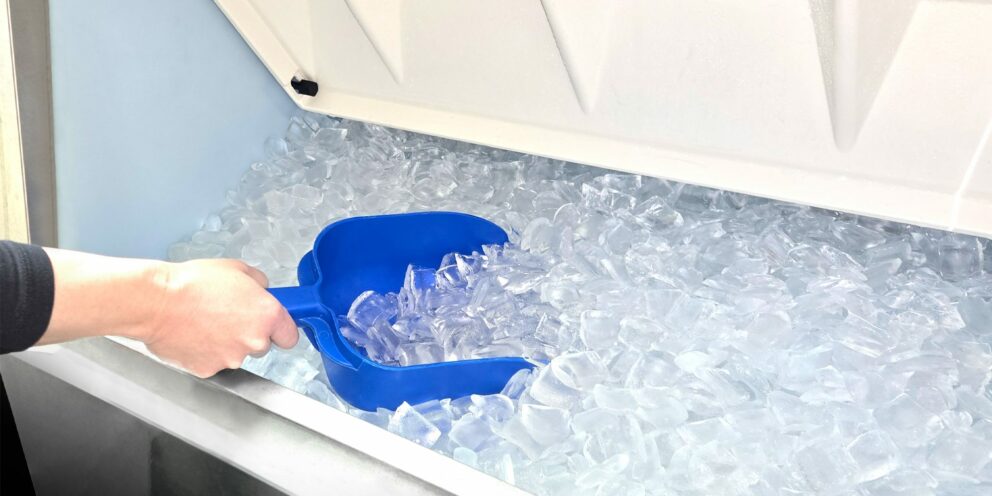
Quick answer: A modular Hoshizaki ice machine needs a compatible storage bin or dispenser. Choose a storage bin when staff will scoop ice for back-of-house production, and choose a dispenser when portion control, self-service, or reduced hand contact matters. Do not size the bin as a fixed percentage of the machine's 24-hour rating. Size the complete system around peak-period withdrawal, realistic production at site conditions, delivery schedule, available space, and the exact compatibility chart for the selected models.
Bin, dispenser, or built-in storage?
The first decision is the type of system you are buying. A modular ice machine is the ice-producing head only and must be installed on a compatible bin or dispenser. An undercounter machine or a Hoshizaki DCM dispenser generally includes its own storage compartment, so a separate bin is not normally added unless the manufacturer's approved configuration specifically allows it.
| Configuration | Best fit | Main consideration |
|---|---|---|
| Modular head + storage bin | Restaurant kitchens, bars, commissaries and other staff-served applications | Provides bulk storage and scoop access; bin capacity and head compatibility must both be checked. |
| Modular head + dispenser | Hotels, institutions and controlled-access service points | Confirms dispensing style, cup or bucket clearance, electrical needs and the dispenser's approved icemaker list. |
| Ice-and-water dispenser with built-in storage | Healthcare, offices, cafés and front-of-house beverage stations | Compact, enclosed dispensing; production and internal storage are separate ratings. |
| Undercounter machine with built-in bin | Low-volume or point-of-use applications | Simple footprint, but less storage flexibility than a modular system. |
When a storage bin is the better choice
Choose a bin when employees need fast access to bulk ice with a scoop, when the machine must build inventory before a rush, or when several workstations draw from one central ice supply. Bins are commonly used below modular crescent-cube, flake and cubelet heads.
A larger bin can provide more reserve, but it does not increase the machine's production rate. If the machine cannot recover between peak periods, increasing storage alone may only delay the shortage. Review actual ice usage by time of day and compare it with realistic machine output using our guide to factors that affect ice-machine output.
When a dispenser is the better choice
Choose a dispenser when users should receive ice without reaching into an open storage bin. Typical applications include hotel corridors, healthcare areas, employee breakrooms and customer-facing beverage stations. A dispenser can also improve portion control and reduce spilled ice, but it must be selected for the actual service pattern.
There are two distinct categories:
- Storage-bin dispensers accept a compatible modular icemaker above them and dispense the stored ice.
- Ice-and-water dispensers such as Hoshizaki DCM models produce ice, store a smaller working quantity internally and dispense ice or water from one cabinet.
Production capacity and storage capacity are not interchangeable. For example, a dispenser may produce hundreds of pounds in 24 hours while holding only a small fraction of that amount at one time. That can be appropriate when ice is dispensed steadily and the machine has time to recover.
A practical sizing method
- Measure demand by time period. Estimate or record how much ice is withdrawn during the busiest hour, meal period, shift or event—not only the daily total.
- Estimate usable production. Published ratings are measured under stated test conditions. Warmer air, warmer inlet water, restricted ventilation and scale can reduce field production.
- Calculate the reserve. Determine how much ice must already be stored when the peak begins, then add a reasonable operating buffer for forecast error and unusual demand.
- Check turnover. Avoid selecting excessive storage that encourages ice to remain unused for long periods. Regular turnover and cleaning are part of sanitary operation.
- Verify the exact pairing. Confirm head width, bin or dispenser width, approved models, top or adapter kit, bin-control requirements, overall height, service clearances and drain configuration.
Planning formula: required reserve at peak start = expected peak withdrawal − realistic production during the peak + operating buffer. This is a planning calculation, not a substitute for the manufacturer's compatibility table or a site survey.
Compatibility comes before capacity
A bin or dispenser with enough nominal storage is not automatically compatible with every ice-machine head. Hoshizaki installation documents require the installer to verify compatibility and properly attach and secure the units. Some combinations require a top kit or adapter kit, and bin-control components must not be obstructed.
Before ordering, verify all of the following for the exact model numbers:
- Approved icemaker-to-bin or icemaker-to-dispenser combination
- Required top kit, adapter kit or mounting hardware
- Machine and bin widths, total assembled height and door-swing clearance
- Floor loading, leveling and access for cleaning and service
- Drain size, route, air gap and local plumbing requirements
- Electrical requirements for both the icemaker and any powered dispenser
- Ice type and whether the dispenser mechanism is approved for that ice
Use the individual Hoshizaki specification sheet and installation manual for the selected models. You can also browse the available Hoshizaki ice bins, then confirm the proposed pairing before purchase.
Do not overlook installation and sanitation
The combined equipment must be level, securely attached and installed with the specified clearances and utilities. A poor drain route, inadequate ventilation or blocked service access can undermine an otherwise correct equipment choice. Review our Hoshizaki installation checklist before finalizing the layout.
Bins and dispensers are food-contact equipment. Follow the current Hoshizaki instructions for cleaning and sanitizing the bin liner, scoop, chute, spout and dispensing components. Store the scoop as directed and keep doors, gaskets and drains clean.
Questions to answer before ordering
- Is the selected ice machine modular, undercounter or a dispenser with built-in storage?
- Who will retrieve the ice: trained employees, hotel guests, patients or customers?
- How much ice is used during the busiest service window?
- How much recovery time is available between peaks?
- Does the exact compatibility table approve this head and bin or dispenser?
- Is a top kit, adapter, stand or separate power connection required?
- Will the assembled system fit through the building and under the finished ceiling?
- Can staff safely reach the ice and clean every required surface?
Frequently asked questions
Does every Hoshizaki ice machine need a separate bin?
No. Modular heads require a compatible bin or dispenser. Many undercounter units and DCM ice-and-water dispensers have built-in storage.
Should a bin hold half of the machine's daily production?
Not as a universal rule. Daily production and storage solve different problems. Base storage on peak withdrawal, realistic recovery, operating buffer, ice turnover and the available approved bin sizes.
Will a larger bin fix an undersized ice machine?
Only when the shortage is primarily a reserve-timing problem. If daily production cannot replace the ice being used, a larger bin will not correct the production deficit.
Can any modular head be mounted on any Hoshizaki bin?
No. Verify the exact models in the current specification and installation documents. Width alone does not establish compatibility, and some combinations require a top or adapter kit.
Is a dispenser always more sanitary than a scoop bin?
An enclosed dispenser can reduce direct access to stored ice, but sanitation still depends on correct installation, cleaning, maintenance and user practices. Choose the configuration that fits the application and follow the manufacturer’s instructions.
Bottom line
Use a storage bin for staff-served bulk ice and a dispenser for controlled or self-service delivery. The right answer depends on peak demand, recovery time, ice type, workflow, sanitation plan and the exact approved equipment pairing. Confirm the current Hoshizaki documents and the installation site before placing the order.
Need help matching the complete system? Browse our Hoshizaki ice machines and contact our team to compare the exact head, bin or dispenser, accessories, and installation requirements for your site.
Featured Product
Recent Posts



My Account
Sign in or create an account to check out faster and track your orders.