
Sign in
Energy Efficiency with Hoshizaki: Lower Bills Without Sacrificing Output
December 01, 2025
144
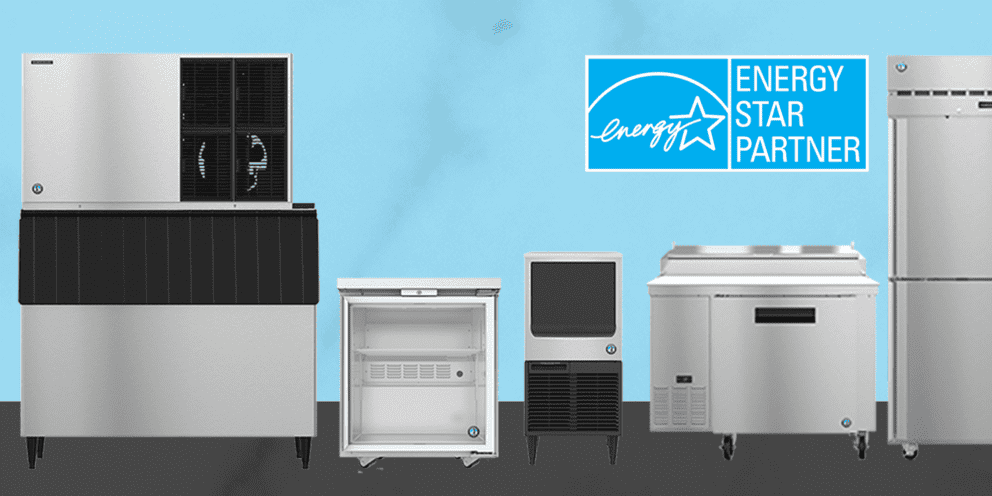
Quick answer: The most reliable way to reduce ice-machine operating cost is to compare current ENERGY STAR or manufacturer efficiency data for the exact models that meet your production needs. Proper sizing, ventilation, water treatment and maintenance can protect that efficiency. Do not assume that every Hoshizaki model or ice type uses the same amount of electricity or water.
What energy efficiency means for an ice machine
Commercial ice machines use electricity, water and—in some configurations—additional building cooling capacity. Efficiency therefore involves more than the purchase price or the advertised pounds of ice per day. A useful comparison considers energy use per quantity of ice, potable-water use, condenser-water use when applicable, actual production under the expected conditions and the cost of maintaining the complete installation.
Model families differ substantially. Condenser type, ambient temperature, incoming-water temperature, voltage, ice type and daily demand can all affect the operating picture. Compare exact model numbers using current manufacturer documents and applicable ENERGY STAR listings instead of applying one general claim to the entire brand.
Start with documented model data
Check certification and specification sheets
When energy performance is a priority, first determine whether the exact model is currently ENERGY STAR certified and review the applicable product specification. A series name alone is not enough because certification and consumption figures may differ by model or configuration. Record the production rating, energy-use figure, potable-water use and any condenser-water requirement shown for the exact equipment.
Compare equivalent configurations
Compare machines intended for the same ice type, production range and condenser arrangement. An air-cooled cube machine and a water-cooled flaker solve different installation problems, so a simple utility comparison may be misleading. Include required bins, dispensers, remote condensers, pumps and adapters when evaluating the complete system.
Size for real demand
An undersized machine may fail to recover during busy periods, while unnecessary capacity can increase purchase cost and may not deliver the expected operating benefit. Build an estimate from actual usage: beverage service, food preparation, display ice, employee consumption, refills, peak-day demand and planned growth.
Planning rules can provide an initial estimate, but they are not universal requirements. Use our commercial ice calculator to organize demand, then confirm the selection against the exact published production rating. Remember that published output commonly varies with air and incoming-water conditions; use the rating that best reflects the installation rather than relying only on the largest number in a product title.
Choose the correct condenser arrangement
Air-cooled, water-cooled and remote-condensed equipment reject heat differently. The most economical choice depends on the building, ventilation, water and climate—not a universal ranking.
- Air-cooled: avoids condenser-water consumption but releases heat into the installation area and requires adequate airflow.
- Water-cooled: can address certain hot or confined installations, but condenser-water use and local utility or code requirements must be included in the decision.
- Remote-condensed: moves condenser heat away from the ice-making area but requires a compatible remote condenser and a correctly designed installation.
Verify condenser type on the exact model number. Do not confuse condenser configuration with undercounter or modular form factor.
Installation conditions affect operating cost
Provide required airflow and clearance
Blocked vents, recirculated hot air and inadequate service clearance can hurt performance. Follow the installation manual for clearances and ventilation. If the room regularly operates above the conditions used for a favorable production rating, account for the lower expected output when selecting equipment.
Verify water and drainage
Confirm water pressure, temperature, filtration and drain requirements before installation. Water treatment should be selected for the local water conditions and the manufacturer's guidance. Filtration can help protect equipment and ice quality, but it does not make every water problem identical or eliminate required cleaning.
Match the electrical supply
Voltage, phase, circuit capacity and plug or hard-wire requirements must match the exact machine and accessories. Electrical work should follow the installation instructions and applicable codes.
Maintain the efficiency you purchased
Scale, dirty air filters or condenser surfaces, blocked airflow and worn components can reduce performance. Follow the exact equipment manual for inspection, cleaning and sanitizing procedures and adapt the service frequency to the water quality and operating environment. Maintenance procedures differ between cube, flaked and cubelet equipment; do not substitute a generic schedule for the manufacturer's instructions.
For model-specific assistance, consult our Hoshizaki technical-support resources or a qualified service provider.
Make a defensible cost comparison
For each candidate, document purchase price, required accessories, expected electricity, potable and condenser water, installation work, warranty and planned maintenance. Use the same operating assumptions for every model. That approach produces a more useful comparison than broad claims about one ice type always being cheaper to operate.
Browse Hoshizaki ice machines or contact HoshizakiIceMaker.com for help comparing current models and complete configurations.
Featured Product
Recent Posts



My Account
Sign in or create an account to check out faster and track your orders.