
Sign in
Water Quality Matters: Why Hoshizaki + Filtration Improves Ice and Reliability
December 02, 2025
269
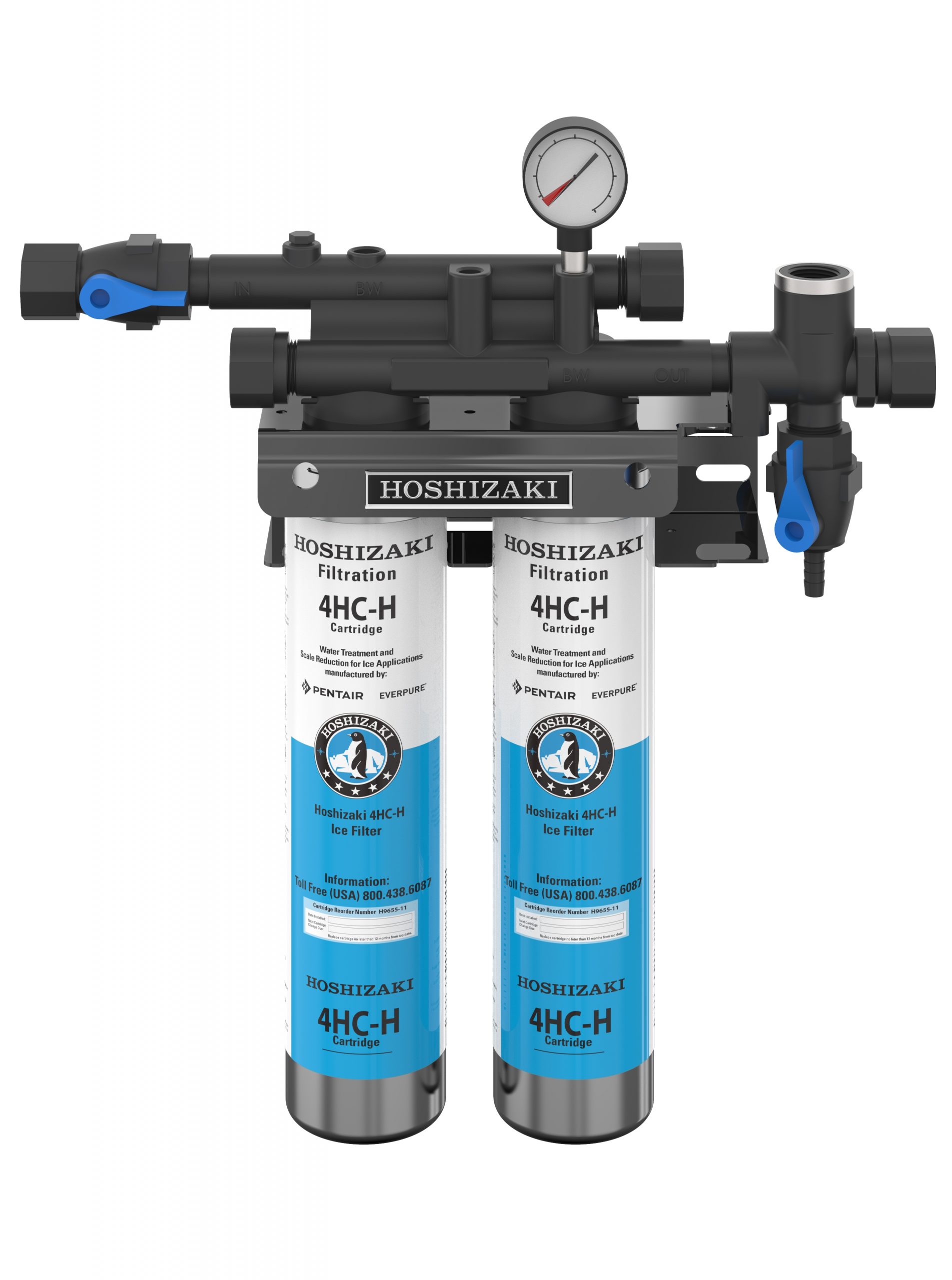
Quick answer: Water filtration can improve ice taste and appearance while helping protect an ice machine from sediment and scale. The correct choice is model-specific: match the filter system to the exact Hoshizaki model and required flow, follow the equipment and filter instructions, and replace cartridges according to capacity, usage and local water conditions. Filtration does not replace cleaning, sanitizing or treatment for microbiologically unsafe water.
What water quality changes in an ice machine
An ice maker concentrates many of the materials carried by its incoming water. Sediment can restrict small passages and valves. Hard-water minerals can form scale on water-contact surfaces. Chlorine, taste and odor compounds may affect the finished ice and the beverages it chills. The result can be inconsistent ice quality, reduced water flow and more frequent service or cleaning.
No single filter corrects every water problem. A useful plan begins with the local water conditions and the exact machine's requirements. Well water, very hard water, chloraminated municipal water and water with known microbiological concerns may require different treatment. When the water is microbiologically unsafe or of unknown quality, Hoshizaki states that its standard filtration systems should not be used without adequate disinfection before or after the filter.
What Hoshizaki's standard 4HC-H filtration addresses
Hoshizaki's current H9320-51, H9320-52 and H9320-53 systems use 4HC-H cartridges. Hoshizaki identifies these systems as NSF/ANSI Standard 42 filtration for particulates, taste, odor and chlorine, with scale-control benefits. The replacement cartridge is H9655-11, also sold as the H9655-06 six-pack.
The published system ratings differ by configuration:
- H9320-51 single system: maximum flow of 2 gpm and system capacity of 21,000 gallons.
- H9320-52 twin system: maximum flow of 4 gpm and system capacity of 42,000 gallons.
- H9320-53 triple system: maximum flow of 6 gpm and system capacity of 63,000 gallons.
For all three, Hoshizaki lists a working-pressure range of 10–125 psi and a water-temperature range of 35–100°F. These are filter-system ratings, not permission to ignore the narrower limits in the ice maker's own installation manual.
How to select the correct filter
1. Start with the exact model number
Use Hoshizaki's current filter-sizing information or the exact product page to confirm compatibility. Do not select a manifold only from an ice machine's advertised daily production. Model family, ice type and application matter. Hoshizaki specifically notes that its standard 4HC-H systems are not recommended for flakers.
2. Confirm required flow and pressure
A filter that cannot provide the required flow can contribute to fill problems or reduced production. Confirm the machine's inlet-water requirements, then allow for the complete installation—including other equipment sharing the water line, fittings, pressure loss and cartridge condition.
3. Account for the actual water problem
Standard filtration may address sediment, scale, chlorine, taste and odor, but it is not a universal solution for every contaminant. High-sediment locations may benefit from a compatible prefilter. Severe hardness or other unusual conditions should be evaluated by a qualified water-treatment professional using current Hoshizaki guidance.
Cartridge replacement and maintenance
Hoshizaki advises replacing 4HC-H cartridges at the applicable gallon capacity or approximately every 6–12 months, depending on usage and water condition. Capacity and time are maximum planning references, not a reason to continue using a cartridge when flow has declined or site conditions require earlier replacement.
- Record the installation date and expected gallon capacity.
- Inspect for pressure or flow changes and check for leaks.
- Replace all cartridges in a multi-cartridge manifold together unless the manufacturer's instructions state otherwise.
- Follow the filter instructions for cartridge replacement and flushing.
- Continue the ice maker's required cleaning and sanitizing schedule.
A filter reduces specific water-related problems; it does not sanitize the machine, clean the bin or replace inspection of the water system. Follow the exact ice maker's instruction manual and use a qualified service provider when scale, low production, abnormal ice or recurring water problems persist.
What filtration can—and cannot—do
Properly selected filtration can reduce dirt and rust particles, chlorine-related taste and odor, and scale buildup. Those benefits can support clearer, better-tasting ice and reduce avoidable maintenance. It is more accurate, however, to describe filtration as protection for the water path than as a guarantee of full production, zero breakdowns or a specific equipment lifespan.
Production is also affected by ambient temperature, incoming-water temperature, condenser condition, ventilation, refrigeration performance and demand. If output has fallen, confirm those factors instead of assuming the cartridge is the only cause.
Common questions
How often should a Hoshizaki 4HC-H cartridge be replaced?
Use the applicable gallon capacity or approximately 6–12 months, whichever comes first, and replace sooner when usage or water conditions require it.
Does the same Hoshizaki filter fit every ice machine?
No. Verify compatibility and flow requirements for the exact model. Hoshizaki's standard 4HC-H systems are not recommended for flakers.
Does filtration eliminate ice-machine cleaning?
No. Cleaning and sanitizing remain necessary. The required procedure and frequency come from the exact machine's instructions and the operating environment.
Where can I compare Hoshizaki filter systems?
Review our Hoshizaki filter-sizing matrix and browse Hoshizaki water-filtration systems. For help matching a current filter and ice-machine model, contact HoshizakiIceMaker.com.
Featured Product
Recent Posts


My Account
Sign in or create an account to check out faster and track your orders.