
Sign in
Top Mistakes to Avoid When Buying a Hoshizaki Ice Machine
December 04, 2025
95
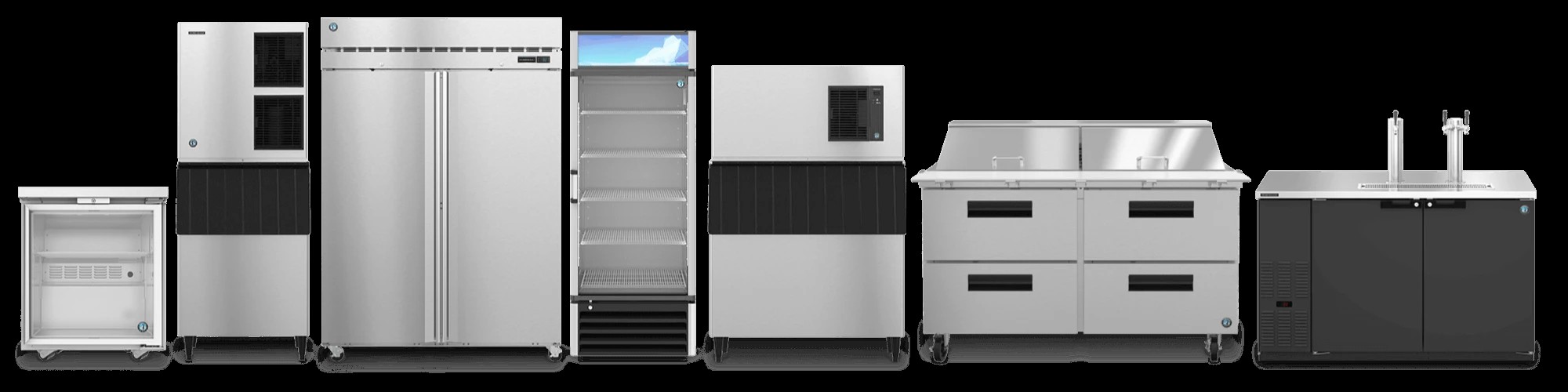
Quick answer: The biggest buying mistakes are choosing an ice type before defining the application, sizing only from a headline pounds-per-day rating, ignoring peak demand and bin storage, overlooking condenser heat and airflow, and ordering before utilities, drainage, filtration and model compatibility are confirmed. Start with the operation, then verify the exact Hoshizaki model's current specification sheet and installation manual.
1. Choosing the machine before choosing the ice
Ice shape affects drinks, presentation, dispensing and food display. Hoshizaki offers crescent, cubelet, soft cubelet, flaked, Top Hat and specialty cube formats. There is no universal “best” ice. Crescent ice is widely used for beverages; cubelet and soft cubelet ice suit applications where chewability matters; flaked ice is moldable for food displays and other specialized uses; specialty cubes are selected for presentation and slower dilution.
Define what the ice must do before comparing machines. Review our Hoshizaki ice-type guide, then confirm the selected machine produces the exact shape your operation expects.
2. Sizing from averages without measuring your operation
Generic industry rules are useful starting points, not purchase orders. Hoshizaki's sizing guidance uses examples such as about two pounds per restaurant customer per day, three pounds per bar seat per day and additional allowances for hotels, cafeterias and healthcare. Your actual recipes, customer count, service style, seasonality, operating hours and local climate can change the result.
Use transaction counts and representative ice portions whenever possible. Multiply actual portions by expected daily volume, then account for food-service ice, employee use, melting, unusual events and growth. Our ice calculator can organize the estimate, but final selection should be checked against the site's real demand.
3. Treating maximum daily production as guaranteed output
A published “up to” production number is normally based on stated test conditions. Hot room air, warmer incoming water, restricted airflow and heavy demand may reduce actual production. Compare the model's performance table at temperatures similar to the planned installation. Do not assume a unit rated for 900 pounds per day will make 900 pounds in every kitchen.
Also separate daily production from recovery during the busiest hours. Ice made overnight may support a lunch rush differently from a location that operates around the clock. Size the system around when ice is used, not only the 24-hour total.
4. Ignoring storage, dispenser and top-kit compatibility
A modular ice maker needs a compatible bin or dispenser. Production and storage are separate decisions: a high-output head can still run out during a rush if usable storage is too small, while an oversized bin consumes space and may not fit the operation.
Confirm the exact bin or dispenser model, top kit, width, control arrangement and installation combination before ordering. Browse current Hoshizaki ice bins, but use manufacturer compatibility information for the exact ice-maker suffix and accessory combination.
5. Selecting a condenser type without planning for heat
Air-cooled, water-cooled and remote-cooled machines manage heat differently. Air-cooled equipment rejects heat into the surrounding space and requires the specified airflow. Water-cooled equipment has different water and drainage considerations. Remote-condensing systems move condenser heat and sound away from the ice-making head but require a compatible remote condenser, line set and properly designed installation.
Do not choose a cooling type from price alone. Consider kitchen temperature, ventilation, water and sewer costs, equipment location, roof or exterior access, distance limitations and local requirements. Never apply one model's clearance or line-set rules to another.
6. Ordering before utilities and drainage are verified
Before purchase, a qualified installer should compare the exact specification sheet and installation manual with the site. Verify voltage, phase, circuit requirements, water pressure and temperature, shutoff location, drain type, drain routing, floor or wall penetrations, service clearances and door or panel access.
“Undercounter” does not mean that every existing cabinet opening is suitable. Cabinet dimensions are not the same as required installation space. Likewise, do not assume a drain pump is included or that a nearby receptacle is correct.
7. Treating filtration as a substitute for maintenance
Appropriate water treatment can help control sediment, taste, odor and scale, but the correct system depends on water conditions, flow requirements and machine capacity. A filter that restricts required flow can create its own operating problem. Use our Hoshizaki filter-sizing guide as a starting point and involve a water-treatment professional when local conditions require it.
Filtration does not replace cleaning and sanitizing. Plan access, labor and downtime for the manufacturer's required procedures. Confirm who will maintain the condenser air path, replace cartridges, clean water-contact components and document service.
8. Relying on a model family name instead of the complete model
Small suffix changes can indicate different cooling, electrical or configuration requirements. Verify the complete model number on the current Hoshizaki product page and specification sheet. Check whether it is active or discontinued, whether a stated replacement is truly equivalent for the application, and whether the electrical version is intended for the U.S. market.
HoshizakiIceMaker.com does not sell 50 Hz foreign-market machines. A superficially similar model is not a substitute for a 60 Hz unit without manufacturer documentation.
9. Assuming every Hoshizaki model has the same warranty
Warranty coverage varies by product series. For example, Hoshizaki's current warranty page lists different coverage for KM cubers, AM and C undercounter machines, flakers, dispensers and storage bins. Confirm the warranty statement for the exact series and manufacturing period, registration requirements and who may perform covered service.
Keep the model, serial number, installation date and service records. Hoshizaki's official warranty page is the controlling reference, not a generic warranty claim in a sales article.
A practical pre-purchase checklist
- Define the required ice shape and application.
- Measure real daily use and peak-period demand.
- Compare production at expected air and water temperatures.
- Confirm usable storage and bin, dispenser and top-kit compatibility.
- Select the condenser type for the site's heat, water and installation conditions.
- Verify dimensions, clearances, electrical service, water supply and drainage.
- Plan filtration, cleaning, sanitizing and service access.
- Confirm the complete model number, current status and warranty.
- Obtain a written equipment and installation scope before ordering.
Common questions
Should I simply buy 20% more production than my calculation?
Not automatically. A buffer can be useful, but it should reflect actual peaks, operating hours, recovery time, storage and expected conditions. An arbitrary percentage cannot correct an inaccurate usage estimate.
Is an air-cooled machine always cheaper to operate?
No universal claim is appropriate. Energy, water, HVAC and installation costs depend on the exact model and site. Compare the current specification data and local utility conditions.
Can I match any same-width bin to a modular ice maker?
No. Width alone does not establish compatibility. Verify the manufacturer-approved combination and required top kit.
Where should I start comparing models?
Browse our Hoshizaki ice machines and gather the site's dimensions, utilities, estimated demand and preferred ice type. For help checking the selection, contact HoshizakiIceMaker.com.
Manufacturer references
Guidance reviewed September 8, 2026: Hoshizaki America's ice-machine selection guide, ice-machine overview, manuals and support resources, and warranty statements. Always use the current documents for the exact model.
Featured Product
Recent Posts



My Account
Sign in or create an account to check out faster and track your orders.