
Sign in
Hoshizaki Ice Machine Beeping or Not Making Ice? What the Alarms Mean
November 22, 2026 5
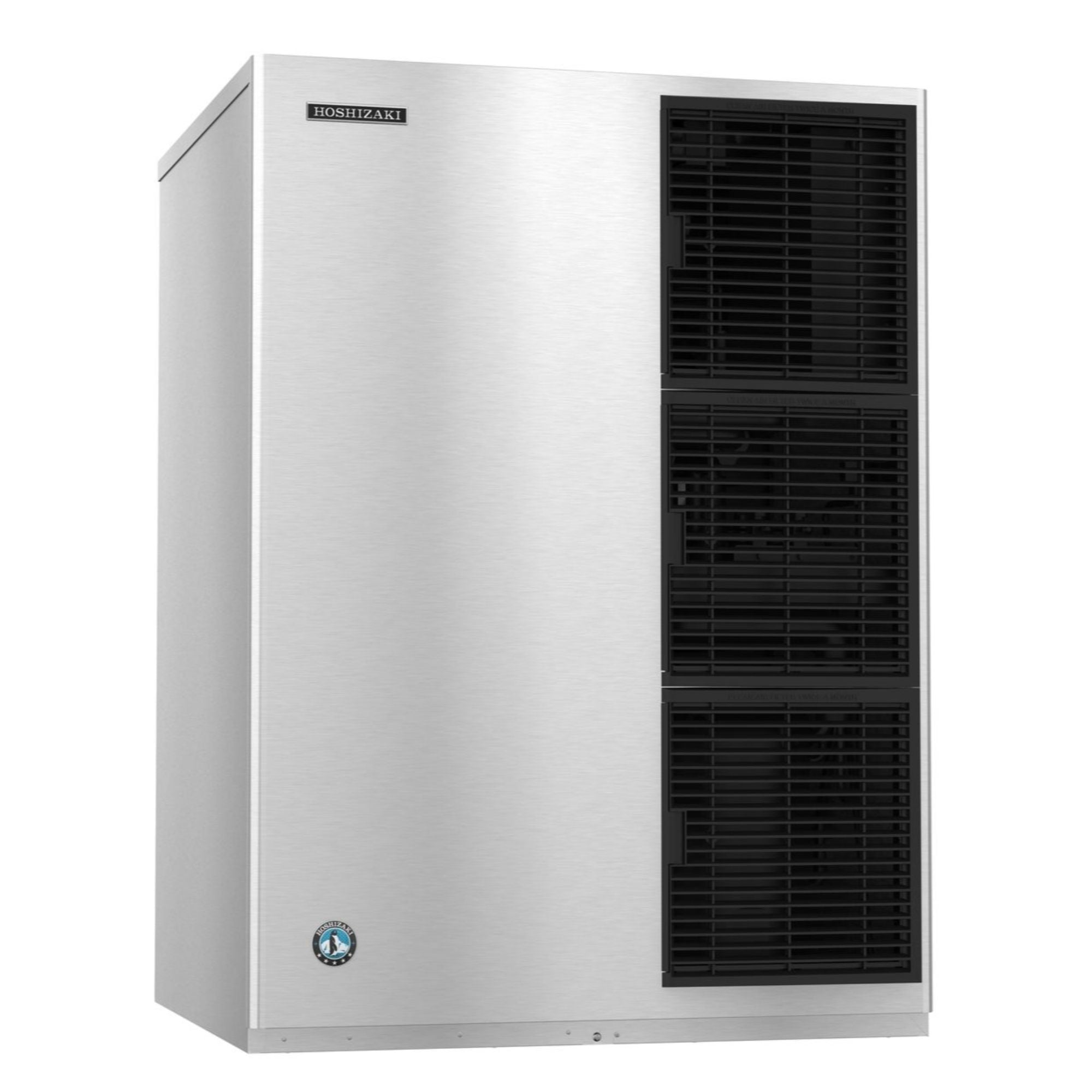
A Hoshizaki KM cuber that beeps and shuts down is not broken in some mysterious way. The control board is telling you which safety tripped. Count the beeps, look at the LEDs, and you are usually most of the way to the part that needs attention.
This guide covers KM modular crescent cubers with the J-series control board (Hoshizaki part 2A7664-02 and the earlier 2A7664-01). It is drawn from Hoshizaki's own service manual for those machines. Undercounter models and older H-series boards use different signals, so check the service manual for your model before you start pulling parts.
First: write down the beeps and the lights
Before you touch the reset button, note two things: how many beeps the board gives, and which LEDs are on or blinking. Pressing ALARM RESET (with the power on) clears the alarm, and then the evidence is gone. If the machine trips again a few hours later, you want to know it was the same alarm both times.
What each alarm means
1 beep: high evaporator temperature
The thermistor read the evaporator above 127°F. That points at something keeping heat in the evaporator when it should not be there. Hoshizaki's list of suspects: a hot gas valve stuck open or a stuck relay, hot water getting into the unit, a stuck headmaster (on remote models), or a shorted thermistor. Start with the water supply. A mixing valve or a hot-water line tied in by mistake is cheaper to find than a bad valve.
2 beeps: harvest took too long
Harvest ran more than 20 minutes, two cycles in a row. The ice is not releasing on schedule. Check the thermistor first (an open thermistor will cause this), then a hot gas valve that is not opening. After that the list moves into refrigeration territory: a leaking expansion valve or liquid line valve, low refrigerant charge, a weak compressor, or a water regulating valve leaking by on water-cooled units.
3 beeps: freeze took too long
The freeze cycle ran past the freeze timer setting, two cycles in a row. The most common cause on the list is a float switch stuck in the up (closed) position, so the board never sees the reservoir empty out. Also on Hoshizaki's list: an inlet water valve leaking by, a hot gas valve leaking by, a pump motor that is not pumping, a bad expansion valve, a liquid line valve not opening, low charge, a headmaster not bypassing, or a weak compressor.
Red POWER OK light blinking
On the 2A7664-02 board this is freeze-time correction. The board saw the freeze time drift too far between cycles and stepped in. If it has to do that a third time within 36 hours, the yellow EXT HARVEST light starts blinking as well. Hoshizaki's instruction at that point is to work through the freeze-up checklist, because the board is warning you that ice is starting to bridge or build up where it should not.
Red light off: voltage problem
If the red light goes dark, the board's voltage protection has kicked in. It trips at about 92 volts or less on the low side and about 147 volts or more on the high side. This one resets itself once the voltage is back in range, so the fix is on the electrical side, not in the ice machine.
Yellow BC OPEN light on
This is not an alarm. The bin control is open, which normally means the bin is full. If the bin is not full, move any ice away from the bin control paddle. If the light stays on with an empty bin, the bin control itself needs checking.
Not making any ice and no alarm?
Hoshizaki's no-ice chart works from the simplest causes to the most expensive, and it is worth following in that order:
- Power supply: breaker tripped, blown fuse, or voltage out of spec.
- The fuse inside the control box.
- Bin control: tripped by ice, set wrong, or failed.
- Control switch left in OFF or WASH after a cleaning.
- High-pressure switch, usually tripped by a dirty condenser or a fan motor that quit.
- Control transformer.
- Control board in alarm, or showing BC OPEN.
- Water supply, then the inlet water valve and float switch.
- Only after all of that: compressor, hot gas valve, thermistor, pump motor and the refrigeration valves.
A surprising number of no-ice calls end at step 4. Someone runs a cleaning cycle, leaves the switch on WASH, and the machine does exactly what it was told.
Making ice, just not enough
Low production and freeze-ups share a short list in the manual: a scaled-up evaporator, dirty or clogged spray tubes and guides, refrigerant charge, the control board, the inlet water valve, the float switch, the pump motor, and the expansion and liquid line valves. Scale is the one you can do something about on a schedule. Regular cleaning with an ice machine cleaner approved for Hoshizaki equipment (see our cleaning materials) and good water filtration keep the evaporator and spray system clear.
Which repairs to leave to a technician
A float switch, a pump motor, a water valve or a control board swap is straightforward for someone comfortable with basic electrical work, with the power disconnected first. Anything that involves the sealed system (expansion valve, liquid line valve, hot gas valve body, refrigerant charge or the compressor) needs an EPA-certified refrigeration technician. Low charge, in particular, is never fixed by adding refrigerant without finding the leak.
Getting the right part
Hoshizaki part numbers change between model series, and many parts have been superseded by newer numbers. Look up your model and serial number, match the part number to the parts list for that model, and order the genuine Hoshizaki part. Most part pages on our site list the Hoshizaki models each part fits, taken from Hoshizaki's parts manuals. If you are not sure, send us your model and serial number and we will confirm the right part before it ships.
Featured Product
Recent Posts

My Account
Sign in or create an account to check out faster and track your orders.