
Sign in
Choosing a Hoshizaki Ice Machine for a Restaurant
December 25, 2025 319
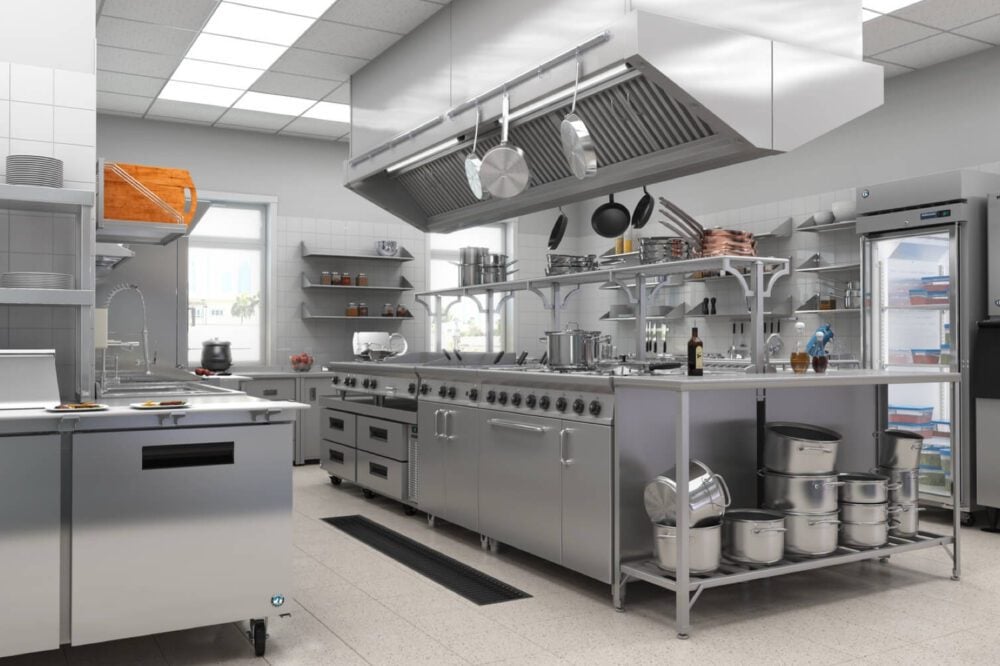
Quick answer: Choose a Hoshizaki restaurant ice machine by measuring peak-period ice use, selecting the ice form for the menu, and matching the exact machine, bin or dispenser, condenser, electrical service, water supply, drainage, ventilation, and service access. Use the current specification sheet and installation manual for the complete model number; a headline pounds-per-day rating is not a guarantee under every kitchen condition.
Start with the restaurant's actual ice demand
Separate beverage ice, bar ice, food-display or preparation ice, employee use, takeout service, catering, and any ice supplied to another station. Measure representative portions and use point-of-sale counts from busy days. Record when ice is consumed because a two-hour rush can exhaust usable storage even when the 24-hour production total appears adequate.
Generic pounds-per-guest rules can be useful for an early estimate, but they are not a purchase specification. Menu mix, glass size, refills, operating hours, seasonality, patio service, events, and local conditions can materially change demand. Build expected and high-demand scenarios, then document the assumptions.
Match the ice form to the menu
- Crescent ice: a common choice for general beverage service.
- Cubelet ice: a softer, chewable form for applications where that texture is desired.
- Flake ice: moldable ice for appropriate food-display, preparation, or process uses.
- Square or specialty ice: selected when the beverage program requires a particular presentation.
No ice form is automatically best for every restaurant. Confirm the exact machine produces the expected ice and that the handling, storage, dispensing, cleaning, and sanitation workflow fits the operation.
Compare realistic production with usable storage
Review the model's production table at air and incoming-water temperatures similar to the installation. Hot room air, warm inlet water, restricted airflow, poor condenser condition, inadequate water flow, or scale can reduce practical output. Separate daily production from recovery during the busiest period.
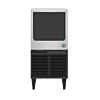
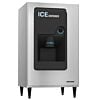
A modular ice maker requires a compatible bin or dispenser. Storage carries inventory into a rush; it does not increase the production rate. Confirm the approved machine, bin or dispenser, adapter, and top-kit combination for the complete model number. For an undercounter or self-contained unit, compare built-in storage with peak withdrawal and recovery time.
Plan the installation before ordering
- Verify cabinet and installed dimensions, door swing, ventilation clearances, and service removal space.
- Match voltage, phase, frequency, circuit, connection method, and grounding to the nameplate and manual.
- Confirm potable-water temperature, pressure, required flow, shutoff location, and every drain connection.
- Select air-cooled, water-cooled, or remote-condensing equipment for the site's heat, water, access, and installation constraints.
- Confirm delivery access, ceiling height, counter openings, floor condition, and final leveling requirements.
Do not assume that an undercounter label guarantees a fit, that a drain pump is included, or that the nearest outlet and drain are suitable. Qualified installers should compare the site with the exact equipment documents.
Use water treatment that fits the site
Water treatment may help manage sediment, taste, odor, chlorine, or scale, but the correct system depends on local water conditions and the machine's required flow. An undersized or overdue cartridge can restrict water. Filtration does not replace cleaning or sanitizing, and standard filtration is not a substitute for treatment of microbiologically unsafe water.
Plan maintenance and ownership costs
Compare the complete cost of equipment, compatible storage, accessories, installation, filtration, energy and water, cartridge replacement, cleaning, sanitizing, preventive maintenance, repairs, and downtime. Warranty coverage varies by product series and does not replace routine maintenance. Keep the model, serial number, installation date, water-treatment records, and service history.
Restaurant selection checklist
- Measure daily and peak-period demand by station.
- Select the ice form for the actual menu and workflow.
- Compare production at expected air and water temperatures.
- Verify usable storage and approved compatibility.
- Confirm electrical, water, drain, ventilation, and service access.
- Plan filtration, cleaning, sanitizing, and emergency ice.
- Review current warranty and availability for the exact model.
Common questions
Should a restaurant simply buy a larger machine?
No. Extra capacity is useful only when it addresses a documented demand or recovery gap and the site can support the equipment. Oversizing can consume space and capital without correcting poor storage, workflow, or installation.
Does a larger bin make more ice?
No. A compatible larger bin stores more inventory; the ice maker's production rate does not change.
Can one machine serve every restaurant station?
Sometimes, but the decision depends on ice type, peak timing, travel distance, sanitation, storage, and failure risk. Separate equipment may be appropriate when stations require different ice forms or independent supply.
Review current Hoshizaki ice machines, the ice calculator, and the filter-sizing matrix. For help checking a specific restaurant installation, contact HoshizakiIceMaker.com with the model, demand, dimensions, and utility details.
Featured Product
Recent Posts

My Account
Sign in or create an account to check out faster and track your orders.